Showing posts with label Internet. Show all posts

Sunday, 25 September 2011

Myxer announces Facebook integrated internet radio service app

Myxer announces Facebook integrated internet radio service app | Ubergizmo window.fbAsyncInit = function() { FB.init({ appId : '139683546053659', status : true, // check login status cookie : true, // enable cookies to allow the server to access the session xfbml : true // parse XFBML }); }; (function() { var e = document.createElement('script'); e.src = document.location.protocol + '//connect.facebook.net/en_US/all.js'; e.async = true; document.getElementById('fb-root').appendChild(e); }()); Network:Ubergizmo English, French, SpanishUberphones Subscribe to RSS Ubergizmo ReviewsMobileGamingAndroidAppleComputersGadgetsConceptsPhoto/VideoEvents |  Jobs Home > Audio > Myxer announces Facebook integrated internet radio service app Myxer announces Facebook integrated internet radio service app George Wong 09/21/2011 13:44 PDT

Myxer Social RadioDo you have a bunch of friends whom you enjoy listening to music with? The company behind Myxer, an online media catalog for mobile devices, has announced a new service targeted at people like you. Called Myxer Social Radio, this service lets users enjoy music with their Facebook friends, engage via video Song Stories, chat with each other in real-time and check out each other’s activity streams. The service will be deeply integrated with Facebook and influenced by a listener’s Facebook friends and social graph.

Myxer will be free for consumers (it will be an ad-supported service), and will be released for iOS and Android as well as on the desktop web. Users hang out together in rooms they create or created by their friends and listen to music that is recommended by Myxer Social Boost. No word on when the service will launch, but you can sign up for more information at the Myxer Social Radio website if you’re interested.

Add a Comment 

Follow Ubergizmo's founders on    Eliane Fiolet  Hubert Nguyen  Topics: Audio, CellPhones | Articles by keywords: myxer, myxer social radio, social radio Reviews Epic 4G Touch ReviewGalaxy S2 ReviewDroid Bionic ReviewHP TouchPad Review - With Our Deepest CondolencesHTC Wildfire S ReviewBlackberry Bold 9900 ReviewMotorola Photon 4G Review
ArchivesIf you want to dig deep into Ubergizmo's past, and check what was going on previously, check our archive page. It's great for random browsing, but a search may be faster to find something specific.
TrendingPSN down and outPS3 3.72 system software update coming your wayiPhone 5 might not see change in home buttonGalaxy S2 ReviewDroid Bionic ReviewFord E-Bike concept Related Articles
User Comments Privacy PolicyTerms of UseContactAbout|  Q: 10  ID: 89378  

View the original article here


This post was made using the Auto Blogging Software from WebMagnates.org This line will not appear when posts are made after activating the software to full version.

Wednesday, 6 July 2011

The Impact of the Internet on Contemporary Literature


Literature basically is everything that has ever been written. Anything from the earliest poems of Homer, to today's web pages, can be considered literature. But for a specific sense, there are various kinds of literature. Literature can be written in a specific language, like English Literature or be written by a specific culture, such as African Literature. But literature really means more than printed words and the internet certainly is a part of literature. I should note that the word literature comes from the French phrase belles-lettres, which means "beautiful writing". When a piece of work is called literature, it is usually considered a great work of art. The internet literature does not necessarily have to be this way for the fact that no one controls the internet literature. In the following essay I am going to speak about the impact of the internet on literature of nowadays.

There are two main classes of literature which are also present on the internet: fiction and nonfiction. Fiction is writing that an author creates from the imagination. Authors may include personal experience, or facts about real people or events, but they combine these facts with imagined situations (Moran, 45). In non-internet literature the project undergoes at least some sort of censorship in terms of what words can be used, yet the internet allows the authors to put anything they desire on the web site and enjoy it. Most fiction is narrative writing, such as novels and short stories. Fiction also includes drama and poetry. Nonfiction is factual writing about real-life situations. The principal forms of nonfiction include the essay, biography, autobiography, and diary (Browner, 90). The internet presents a new forms--internet pages, or internet books.

People read literature for a variety of reasons. The most common reason for reading is pleasure. People read to pass the time, or for information and knowledge. Through literature, people meet characters they can identify with, and sometimes find solutions for their own problems. With literature, a person can often understand situations they could not otherwise understand in real life (Koehler, 28). Often, just the arrangement of the words can be enjoyable, just as a child likes the sound of "Ring Around the Rosie", even though they might not understand what the words mean. There are four elements of literature: characters, plot, theme, and style. A good author has the ability to balance these elements, creating a unified work of art. The characters make up the central interest of many dramas and novels, as well as biographies and autobiographies. A writer must know each character thoroughly and have a clear idea about each ones look, speech, and thoughts. The internet literature is not difficult to create for the fact that unlike "traditional" literature the internet literature requires minimal start up costs (Moran, 47). And because reading usually involves convenience, at some point of time one would not be surprised to see convenient electronic devices that could be transported anywhere and would download books from the internet and present them in digital format.

Motivation is the reason for characters actions. A good writer will be sure that the motives of a character are clear and logical. The internet writers do not have to be this way, they are not controlled and they hardly risky anything by publishing online. Setting is where a character's story takes place. The plot is built around a series of events that take place within a definite period. It is what happens to the characters. No rules exist for the order in which the events are presented. A unified plot has a beginning, middle, and an end. In literary terms, a unified plot includes an exposition, a rising action, a climax, and a denouement, or outcome. The exposition gives the background and situation of the story (Browner, 93). The rising action builds upon the exposition. It creates suspense, or a reader's desire to find out what happens next. The climax is the highest point of interest, also a turning point of a story. The denouement is the conclusion. The theme is the basic idea expressed by a work of literature. It develops from the interplay of character and plot. A theme may contain morals, to warn the reader to lead a better life or a different kind of life. The internet literature does not have to be this way at all because no one controls it. The write take minimal risk in terms of investment, yet possibly can find readers from all over the world, which can pay for the e-book and download it to their own computers, is very high (Moran, 49).

A serious writer strives to make his work an honest expression of sentiment, or true emotion. They avoid sentimentality, which means giving too much emphasis to emotion or pretending to feel an emotion. A writer of honest emotion does not have to tell the reader what to think about a story. A good story will direct the reader to the author's conclusion. Style is the way a writer uses words to create literature. It is difficult to enjoy a story's characters or plot without enjoying the author's style (Browner, 98). The style of an author is as important as what he is trying to say. Point of view, or the way a story is presented, is another part of style. A writer may tell a story in the first person, using the pronoun I, as though the narrator were a major or minor character in it. Or, the writer may use the third person method, in which the narrator stands apart from the characters and describes the action using such pronouns as he and she. There are two types of third person views: limited and omniscient. In the third person limited point of view, the narrator describes the events as seen by a single character. In the third person omniscient, or all knowing, point of view, the narrator reports on what several characters are thinking and feeling. Reading is an intently personal art. There are no final rules for judging a piece of writing. Often, people's judgment of a work can change as taste and fashion change. Yet the classics continue to challenge readers' imaginations and give ageless advice. Shakespeare will most likely be as popular a hundred years from now as he is today. That is power of literature. Literature is timeless (Moran, 53).

It should be noted that literature can have many and different values on a person and it is the internet that allows literary values to be delivered to the audience without any barriers. It is all depending on the story and the value or moral issue the author wants, you, the reader to get out of it. The value literature had on me was actually hard to put into words. But to understand the value of literature you must know the definition of value and literature. Value has many meanings but there is two that relate (Browner, 102). Worth in usefulness or importance to the possessor and a principle, standard, or quality considered worthwhile or desirable. Literature is a body of writings in prose or verse. Literature produces value because it is basically an analysis of an experience or situation (Koehler, 30). I got a different value out of each story. With Mark Twain's The Adventure of Huckleberry Finn it showed me that one does not have to be civilized or conform to the ideas of society to become cultured or mature. With Huck Finn he ran away from everything that was considered civilized (Moran, 58). He had nothing and really did not want anything. But at the same time he experienced and matured living dangerously. This made me value Huck's adventure and take it as my own. Huck proves his maturity when he comments on how the king and duke dupe the villagers into believing that they are the dead man's brothers, and Huck says, "I never see anything so disgusting."(Twain 163) Even though the king and duke commit an awful act on the villagers he still feels sorry for them when they get tarred. Huck comments, "Human beings can be awful cruel to one another."(Twain 225) In William Faulkner's Barn Burning it told of a man named Abner Snopes who burned barns when upset or mad. This was his way of getting back at them. "Barn Burning" has two very evident struggles (Browner, 105). Abner oppresses his family just as the upper class has oppressed him. "Barn Burning" to me is based on misdirected anger. Which is basically happening in these days. For example, a teenager and his parents have it out, he leaves, and now his anger is directed toward anything in his pathway. "Barn Burning" has a value in that it shows in life that people actually misdirect their anger. Such as in the school shootings and bomb threats that have occurred in the past couple of years (Koehler, 33). Just like Abner Snopes felt like an outsider to the upper class, so did the students who committed these violent acts. In "The Swimmer", it made me value life and what it brings. Because if your not careful or you do not watch out it will past you up without notice (Browner, 109). As with "Everyday Use", one of the daughters did not value who she was or whom she was because she was going out looking for her history. Which she already had at her fingertips.

Conclusion:

In conclusion I would like to note that reading all of the literature which colleges and universities assign to their students involves very high costs to the society in terms of paper consumption and time wasting (that involves going to the library, or to the book shop, etc). The internet and the ability to download the books from online to one portable device would reduce the costs, save the trees, and will make people more efficient. I realize that there are a lot of things that we as people in this society take for granted. Literature has made me value a lot of experiences and situations so far and I enjoy holding the paper book in the evening preparing for the next day, yet I do not protest against the use of the digital technology to create digital books that would contribute not only to the efficiency but also to the reduced costs to the whole society.


Holly Odom is a freelance writer working for essaymart.com - on line Custom Writing/Research company. She specializes in Social sciences, Arts, History and English literature. During 2005, earned became one of 10 best writers at essaymart.com.


This post was made using the Auto Blogging Software from WebMagnates.org This line will not appear when posts are made after activating the software to full version.

Facebook - Internet Marketplace For Pros and Newbies


Getting Facebook traffic to Internet marketing offers has been the Holy Grail eluding most marketers. Only those who dig into the mechanics of Facebook truly understand its power. How do you crack the code?

To put Facebook's current rate of expansion into some kind of perspective - one year ago the site was enjoying 15,000 new user sign ups per day. By the end of 2007, that figure was over 100,000 new sign ups each and every day, and the site is expanding at a super-charged rate of 3% per week according to the latest statistics presented by the company Founder and CEO, Mark Zuckerberg.

Perhaps, you'll be pleased to know, Zuckerberg also claims that the fastest growing demographic group of new Facebook users is in the over 25 years of age group. This would suggest a 'maturing' of the Facebook community, and the beginnings of a move away from the original bias towards those with a college and high school background. This is already proving to be a lucrative demographic for marketers!

Indeed, over 60% of registered Facebook users are now non-college students, and that figure is expected to increase to over 75% (that will be 50 million users) in the next six months. Non-college students spend money in greater numbers on the web that the so-called highly educated. This is money in the bank for marketers who can see Facebook with different eyes.

Facebook is currently attracting 70 billion page views per month, and was the sixth most trafficked website in the USA, having recently surpassed eBay, and is now rapidly closing in on Google's traffic figures. This kind of traffic adds up to a major marketing field for marketers who know how to social network.

You need to see this globally as Facebook is not quite so focused on the USA as it once was, with over 10% of Canadians now being Facebook account holders, with similar levels in the UK.

If you then add in the fact that Microsoft paid 240 million US dollars for a 1.6% stake in FaceBook (which values the company at around $15 billion in total) you clearly have a picture of a company and a social networking model that is going places very quickly indeed.

It is clear that Facebook is a website and social community that is enjoying phenomenal levels of growth from what was a relatively closeted and deeply specialized background. These numbers would also clearly indicate that Facebook could represent a potentially huge marketplace for any business or organization that can create means of advertising that are effective with the site members. If you think this is only for Internet marketers, you would be mistaken.

Many marketers who used MySpace to pad their bank accounts, and still do, have tried and failed to duplicate their success on Facebook. The reason? They tried a cookie-cutter approach to Facebook {members|users}. In other words, they reasoned, MySpace and Facebook are both social networking sites so why not use the same tactics for both? This is wrong thinking because the members of each site are different in social makeup and need to be wooed differently.

Let's look at just one of the advertising options that is free within the FaceBook community site.

"Pages"

To create "Pages" you need to go to the first screen for creating 'Social Ads'. You will be given the option of sending your visitor to pages of your website that are outside of Facebook or given the option of creating a new 'Page' on Facebook itself. Creating a page on Facebook is the obvious choice because we will design the page to lead to our website off Facebook.

Creating such a 'Page' costs nothing and allows you to create a one page mini-site about your business. It is essentially a full one page advert for your business.

When you first visit the 'Pages' page, you will immediately see that there are three drop down menu boxes at the top of the page. The first of these boxes is for listing a home grown business based locally. The drop down shows all of the different types of business that you can list, such as, Automotive, Banking, Café, Grocery etc. There are many to choose from.

The next drop down lists businesses by product or service. You'll want to focus on this. This is where you likely will focus your marketing efforts.

One of the categories that should meet your needs in this second 'drop down' is 'Online Store' . This is the category in which most smart internet marketers are promoting their services! Remember that this is a free advertising tool, so it will certainly merit making a little bit of effort to take advantage of this resource.

I not only recommend that you exploit this category listing, and create your own page, but that you build it with as 'passive' a voice as you can. In other words, don't hard sell simply because you will not outsmart FaceBook veterans. Instead, do try to make your online store a place that is entertaining enough to entice visitors in, rather than shouting at them that they must visit you. Shout and they will flag you as a spammer!

So, make your page as interesting, engaging and exciting as possible. You can do this by adding extra 'applications' to your Page. Add things like videos, pictures, flash content, reviews and so on. Make your page stand apart from others in your niche but use common sense and good design.

As FaceBook expands there has never been a better time to start building your page than right now. What are you waiting for? You should take action immediately!


There is much more to know about advertising on FaceBook. Jim DeSantis is an Internet Publisher and former TV News Editor who provides information about FaceBooking for experienced and newbie Internet Marketers at http://www.answersplus.info

AnswersPlusInfo. Check the sidebar for "FaceBook Advanced" and FaceBook for Newbies."


This post was made using the Auto Blogging Software from WebMagnates.org This line will not appear when posts are made after activating the software to full version.

Monday, 4 July 2011

Facebook - The La Brea Tar Pits of the Internet


Let's suppose that it's 35,000 years ago and you're a Wooly Mammoth. You're casually lumbering along, as you like to do. It's a hot day, and you're thinking it would be nice to find a pond or something where you can wet yourself down, cool off, maybe take a long refreshing drink. You happen upon just such a spot. You look around, and there's nothing untoward, so you dip a little bit of your foot in, and discover that the water is pleasant. You're up to your ankles, and nothing unusual has occurred, so you wade in further and stand there, up to your knees, soaking and sipping, and generally enjoying yourself.

After a while, feeling very much invigorated, you decide to mosey on, maybe find some marsh grass to nibble upon for a snack. What you didn't notice is that while you were wallowing, distracted, you've been slowly and imperceptibly sinking in to a pit of viscous goo. By now you are well and truly stuck. You may thrash around and try to extricate yourself a bit at first, but eventually, exhausted and resigned, you are completely enveloped by the innocuous-looking Tar Pit.

As with the hapless mammoth, so is it with the innocent Internet user upon encountering Facebook.

Even trying to write about Facebook is difficult, because it is sprawling, addictive and idiosyncratic. It is cohesive and fragmented, frivolous and utilitarian, a boon to society and a scourge to productivity. In case you haven't noticed, I have mixed feelings about Facebook. This article doesn't purport to be a review or an endorsement, but more of an overview, and perhaps an introduction. I'll be that initial elephant foot dipped in the water. Whether you decide to wade in is up to you.

What is Facebook?

What is Facebook? If we ask our old friend, the Wikipedia, it will say this:

"Facebook, formerly TheFacebook, is a free-access social networking website that is operated and privately owned by Facebook, Inc."

That's a start.

Free access: anybody can use it. You don't have to pay for it.

Social Networking Website: A website where people voluntarily share information with friends, family, colleagues, and total strangers, and join themselves into groups and affiliations of all different varieties and sizes (more on groups in a little while). Facebook is all about communication, and members interact with one another in several different ways.

[NOTE: In this article, I will be capitalizing Facebook as a proper noun. In the company's logo, it is spelled all in lowercase.]

When you first sign up with Facebook, you create a profile. The profile contains a whole range of information about you. You can decide how much or how little to share, and you can control who gets to see the information. The settings allow you to control the levels of privacy. Some of it can be for public consumption, or just visible to the people in your network, or just to members of specified groups of family or friends.

Your profile page is broken up into different tabbed sections. You click on the tab to make that section active. The main sections are: Wall, Info, Photos, and Notes.

Info is pretty much what you'd expect. When you begin with Facebook, you join different networks. The main one will probably be based on a geographical area, usually a major city. For example, I belong to the "Los Angeles" network. You can also join networks based on where you went to school, and the company you work for.

The information that you share can be as detailed as you want, from your gender and your hometown to relationship status, political leanings and religious views. There is room to list your favorite music, movies, television shows and books. Once again, all the information is voluntary, and you don't have to share it with anyone you don't want to.

Photos get uploaded to the Photos section. You can "tag" someone in your photo by clicking on the center of a face, and entering the person's name, so that the face is associated with the person. If the person is also a member of Facebook, that picture will be linked to their profile as well.

Notes is a section where you can write or attach text: a poem, essay, opinion, idea; anything.

Wall is the equivalent of a virtual public wall where information about you is available to your friends and group members (more on those in a moment - I promise). Every time you do something in Facebook, you can choose to have it posted to your wall. This is also where you can type a short message about your status.

More exciting terms defined: Status, Friends, Groups & the News Feed!

The Status box is an empty box at the top of the screen labeled "What's on your mind?" You can write anything you want in this box, and it is displayed on your wall and on your profile page. If you wish, you tell everybody that you just walked your dog, or had a really terrific plate of scrambled eggs, or that you're feeling cranky, or will be picking up shirts from the dry cleaners, or that you're upset with a political figure's recent speech, or that you liked a movie, etc. etc. etc. You may attach links to anything on the internet, should you want wish to share something you've found interesting. You can also attach pictures, and upload or link to videos. You are limited only by your imagination and your own sense of propriety.

I should say at this point, that there are rules governing what you can and can't link to or say. They're pretty basic and you agree to them when you create your Facebook account. They can also be found at the "terms" link at the bottom of every page. There has been some controversy in the past with regard to the ownership of intellectual property when you post your original content to the site. They've modified the terms based on the feedback from the community, and my impression is that they're not out to screw you. Nevertheless, if you have a legitimate stake in your intellectual property, as a writer or photographer, etc., it would behoove you to carefully go over the terms before you post anything. This, of course, is true when posting anything, anywhere on the web.

You can easily configure Facebook so that you can post status updates from your cell phone. This allows you to share text, pictures and video from out in the world. No longer must you be tethered to your computer, should you wish to share your thoughts and feelings!

After you've been using the site for a while, your Wall becomes a document mirroring your life and activities, thoughts and interests.

Friends is an important concept on Facebook. Think of a friend, relative, coworker or acquaintance with whom you would like to be connected. You can search for them by their name. If you find a match, you can invite them to be your Friend. If the other person assents, then you each show up among the list of approved friends for the other. You then have access to each other's full profile, and your status updates will appear in each other's news feed (explained very soon).

All of the information in your profile that you have labeled as being acceptable to share with your friends will be available in your friend's version of your profile. Similarly, your friend's profile information is now available to you. You may also become friends with someone if they initiate the process. If they do, you will receive an invitation to become friends with the other person. If you recognize the person and choose to become friends, you can accept the invitation and then you will show up in each other's friends list as well.

You can post messages and comments to your friend's public wall. These Wall-to-Wall messages show up on both of your walls. It's a quick and easy way to communicate with someone, but don't forget that it isn't private. Anyone with access to either wall will be able to see the exchange.

If you want to communicate more privately, there is a message system that will be familiar to anyone who has used web-based email. It works like a simple version of gmail or hotmail, and allows you to send private messages to any of your Facebook friends, or the people in the groups to which you belong. Speaking of groups...

Groups are collections of Facebook members with a common interest. Anyone can create a group for any topic. For any given group, the creator can choose to make membership available to anybody in Facebook, or they can restrict the group to membership By Invitation Only, meaning the group is searchable on Facebook, but members can only join with the permission of the group's creator. Finally, the group can be private. A private group won't show up in the Facebook search engine, and can only be joined by the invitation of the group's creator.

Here are some examples of just a few of the groups to which I belong:


Friends of the Walt Disney Family Museum
Bone Marrow Transplant Awareness
When I Was Your Age, Pluto Was A Planet
Californians Against Public Education Funding Cuts
Lost Timeloop Theory Fan Club
BookCrossing
Another main Facebook feature is called the News Feed. The News Feed is a page that posts updated status messages, pictures, and links from the friends in your friends list. It's like having a stock market ticker of your friends' lives.

Fun & Games

Besides updating your own status and keeping tabs on the status of your various friends, there are hundreds, perhaps thousands of different activities to occupy your time on Facebook.

Finding your way around on Facebook takes a little getting used to. The paths from one area to another, and the methods, for example, for sharing a link from your status box, or your wall, or your news feed are slightly different. If you need help, you can always post a question to your Facebook friends on your wall, and chances are you will quickly be inundated in advice. Facebook has a pretty good help system built in, and you can access it from the link at the bottom of most pages. There is also a search box in the upper right corner of each page. This is a good place to go if you are looking for a person, group, or application.

Although Facebook is free, you are continually exposed to advertising, mostly in a column down the right side of the web page.

Of course there is a chat feature. In the lower-right hand corner of the window, you can find a list of your friends who are currently online. By clicking on a name, you can start a text chat with someone.

There are thousands of quizzes available on Facebook, on every conceivable subject. If you want to discover which Disney Princess you most resemble, or which sandwich, Transformer, chemical element, Star Wars character, etc., there is a quiz for you. You can share your quiz results and compare them to your other friends who have taken the same quiz. The tools are available to make your own quizzes to publish and share, should you so desire.

One of the more bewildering Facebook applications lets you give and receive virtual "gifts" to your Facebook friends. The gifts come in thousands of varieties. You can choose birthday cakes, plants, buttons with slogans, furniture, motorcycles...anything you can imagine can be made into a gift and then shared. You can choose from existing gifts or create your own.

Another strange thing to do is to poke a friend. When you "poke" somebody, they receive a message that they've been poked by you, and they may opt to poke back. Then you will receive a message that you've been poked, and you can poke that person back again. It reminds me of two siblings in the back of a station wagon on a long trip: "If you kids keep poking each other, I'm going to turn this internet right around!" One friend came up with an explanation for this behavior that almost makes sense. Poking is just a way to let the other person know that you were thinking about them, which is a nice sentiment, I suppose. Poking on Facebook is less likely to cause restraining orders than in real life.

There are many many free applications available. Some are useful, some frivolous. You can keep track of events and birthdays with calendar programs that send you reminders of your friend's birthdays. You can maintain a list of the books you read, and share reviews with other members using applications like WeRead and Visual Bookshelf. Some of the applications are variations on simple games. They derive their income by getting you to play and exposing you to advertising. Some claim to be for a good cause, like saving the rain-forest, and others are simply for fun. In games like Lil' Green Patch, and Lil' Blue Cove, you collect and maintain plants, or fish, and send them to your Facebook friends.

There are travel games where you kidnap another player to a destination of your choosing, and they must answer a travel-related question to escape. You can trade salvos with a variety of water pistols or participate in an online pillow fight.

There are games where you unscramble words or manipulate shapes for points.

All of these games combine a participatory element, so that you can play with or against other Facebook friends.

The Big Wrap-Up

Facebook is so successful because of the social element: the ability to communicate with your social network. The site is well-known for reuniting people who haven't spoken in decades. It is an amazing tool for locating school-mates from the third grade, ex-girl and boyfriends, and faces from the past.

The idea of this seething community of people that you know, spread across the globe, busily pursuing their daily activities, living, loving, amusing themselves and each other, is what makes Facebook so addictive.

Before I wrap this discussion up, I would like to make mention of the potential business uses for Facebook. People and companies can speak directly with their clients, and maintain open lines of communication. Organizations can quickly and easily communicate among their employees through the use of groups as well. It gives a business new and immediate ways to connect to their clients.

Facebook doesn't really do any one new thing that can't be found elsewhere on the web. It is a success story because of the unique way in which it combines all the different elements. With over 200 million users, it has achieved a critical mass that allows it to leverage the affects of social networking. The site is still in its infancy, and exactly where it will go, how it will grow, and what new ideas and opportunities it will offer is open to speculation. It should be an interesting ride.

Meanwhile, come on in, the water's fine. Don't worry too much about sinking in the tar, you'll be entertained all the way down.


Larry Spinak is a professional computer consultant and tutor in Los Angeles, CA. He started his own firm in 1999, called CompuNerds.
© 2009 - All rights reserved


This post was made using the Auto Blogging Software from WebMagnates.org This line will not appear when posts are made after activating the software to full version.

Facebook - The New Internet Marketing Frontier


It takes getting eyeballs to see your product or service, millions of eyeballs, and Facebook is an untapped marketing resource. Only a handful of Internet wise guys know how to use it. Here are some tips.

Facebook, Inc., runs a leading social networking web site, Facebook.com. Initially launched by undergraduates at Harvard University for college students, the site was soon expanded to include alumni in the corporate world as well as high school students. Membership was opened to anyone with a valid e-mail address in 2006 and it has grown into the millions since.

The key to marketing on Facebook is this: A members full profile information is available only to other members who are somehow connected. The resulting "connections" is what makes Facebook a billion-dollar idea that offers fat bank accounts to marketers who know how to be one of "them".

A news feed feature, controversial at first, allows sponsors to push ads to highly targeted audiences in ways never before imagined. The value of these online connections that imitate those in real life is also reflected in classified advertising and that is where marketing is done, for free, among those connected "friends".

Forget about trying to spam the system. Friends tell their friends about spammers and global searches of all registered users are not possible, limiting the possibilities for SPAM and other abuses.

Facebook has features to stay relevant in the Web 2.0 world. It leads the generation of interactive web sites designed to make it easy for users to share video, music, and other multimedia content. And, for marketers to reach those people in this sharing model.

Facebook ranked as the sixth or seventh largest social networking site. It was on top in some key metrics, according to ComScore Media Metrix statistics quoted in Fast Company. It led the country in photo sharing, a capability at the heart of the Web 2.0 challenge. In 2007 the company signed up with Comcast to produce a webcast called the "Facebook Diaries," based on video contributed by users. Opening membership to the general public swelled the membership rolls and shifted the demographics away from the college age crowd. Interestingly, more than one-quarter of users were outside the United States.

Some marketers saw this shift to an older, more affluent, user base and moved in to make Facebook a steady source of steady income.

Some of the site features these marketers are using include:

........ The Wall

The Wall is a space on each user's profile page that allows friends to post messages for the user to see. One user's wall is visible to anyone with the ability to see their full profile, and different users' wall posts show up in an individual's News Feed. Many marketers use their friend's walls for leaving short, temporal notes. More private discourse is saved for Messages, which are sent to a person's Inbox, and are visible only to the sender and recipient(s) of the Message, much like email.

Facebook users are allowed to post attachments to the wall, whereas previously the wall was limited to textual content only. Marketers are wisely using this feature.

........ TheMarketplace

In May 2007, Facebook introduced the Facebook Marketplace allowing users to post free classified ads within the following categories: For Sale, Housing, Jobs, and Other. The market place is available for all Facebook users and is currently free. You can guess how valuable this feature is to marketers.

........ Pokes

Facebook includes a "poke" feature which allows one user to send a "poke" to another. Facebook defines it as - "a poke is a way to interact with your friends on Facebook. When we created the poke, we thought it would be cool to have a feature without any specific purpose. People interpret the poke in many different ways, and we encourage you to come up with your own meanings."

In principle this is intended to serve as a "nudge" to attract the attention of the other user. Friends often engage in what is known as a "poke war," where the poke is exchanged back and forth continuously between two users by using the "poke back" feature.

There are several new applications such as "X Me" and "SuperPoke!", that allow users to put any action in place of the word "poke." Again, smart marketers have found ways of using this feature as well.

........ Status

The "status" feature allows users to inform their friends and the Facebook community of what they are up to. Facebook prompts the status update with "(User name) is..." and Facebook users fill in the rest. Status updates are noted in the "Recently updated" section of a users' friend list. How about "Mr. blue is working on a new ebook."?

........ Events

Facebook events are a way for members to let friends know about upcoming events in their community and to organize social gatherings. This can be used for seminars, meeting, courses, podcasts, etc., but, used very carefully to avoid being tagged as a spammer.

........ Applications

The "Facebook Platform" provides a framework for developers to create applications that interact with core Facebook features.

Among the most popular applications are "Top Friends", which allows users to select and display their favorite friends; "Graffiti", which gives users a visual version of Facebook's wall; and "iLike", a social music discovery service that features concert information and a music trivia game, similar to the one featured on the iPod. Even games such as chess and Scrabble are available.

........ Facebook Video

Users can add their videos with the service by uploading video, adding video through Facebook Mobile, and using a webcam recording feature. Additionally, users can "tag" their friends in videos they add much like the way users can tag their friends in photos. This feature was expected to increase competition with MySpace. However, the Facebook Video Application does not allow sharing videos outside of Facebook.

Users are not supposed to be able to export or download videos from Facebook. I say "not supposed to" because a Greasemonkey Userscript was posted on Userscripts.org which allows both the downloading of Facebook Videos and the embedding of Videos on sites outside of Facebook's website. Another marketers dream tool.


Get educated about FaceBook marketing today. Jim DeSantis is an Internet Publisher and former TV News Editor who provides information about FaceBooking for experienced and newbie Internet Marketers at http://www.answersplus.info - AnswersPlusInfo. Check the sidebar for "FaceBook Advanced" and FaceBook for Newbies."


This post was made using the Auto Blogging Software from WebMagnates.org This line will not appear when posts are made after activating the software to full version.

Saturday, 25 June 2011

Internet Marketing Consultant Words of Wisdom

Colorado Internet Marketing Consultant Kevin Yeaman


Internet Marketing consists of a variety of marketing methods where the primary objective is to get new business prospects to your sales page, main website home page, or best marketing page which is enhanced through landing page optimization and draw them in to wanting more information and hopefully capture their contact information or get them to request more facts.   Our primary internet marketing consultant specialty is Colorado SEO search engine optimization marketing.  Ultimately you are probably going to try a variety of internet marketing strategies before you finally settle on what’s right for your business that delivers the most bang for the buck or return on investment.


Internet Marketing Consultants Services


Some of the most common internet marketing services that Internet Marketing Consultants sell are:


  • Email Marketing – email marketing where you send messages to a qualified opt-in list of prospects to subscribe to your newsletter or regular news postings.

  • Pay Per Click Advertising – Another type of internet marketing is to buy advertising on search engines which is called pay per click advertising where you pay a certain amount of cost or dollars for click troughs when clicking on your displayed advertising.  The more you pay the higher your ad is positioned on the Google SERP page.

  • Banner Advertising – Banner advertising is a type of internet display advertising where you create a banner ad to display on related content which can lead to qualified leads plus you pay the host for getting the visitor to click through to your page.  Banner advertising is commonly used in Affiliate marketing advertising.

  • Affiliate Marketing – In Affiliate Marketing there is a network of sites that pay each other for referring targeted traffic for specific types of call to action steps taken by the online customer.  It can also include various types of Social Media Marketing indeed with sites such as Linked In, Facebook, and Twitter garnering significant marketing potential.

  • Social Media Marketing or Social Media Optimization – Social media marketing on any one of hundreds of sites can bring traffic to your main target website if done correctly.

  • Video Marketing – An example of video marketing can be from Googles’ Youtube site.

  • Digital Marketing – This is a broad term much like internet marketing.  Additional types of internet marketing or digital marketing services include all types of permission marketing where you agree to be marketed to from your opt-in confirmations from your personal email account.

  • Local Search Marketing – Local Search Marketing in your local geographical community would use different internet marketing strategies for competing in your immediate geographical area versus competing globally for keyword rankings or competing in the United States of American only for instance.


Final Word = Search Engine Optimization = Best Internet Marketing Method IMHO


We have tried them all and found that focusing upon a primary business website and investing in it to become a focal point of your periphery marketing efforts delivers the best return on investment in the long term where search engine optimization is used to build up the main site into an authoritative site in its chosen keyword query space.  There are advantages and disadvantages of search engine optimization SEO which should be considered before making your final choice for your internet marketing consultant strategy.


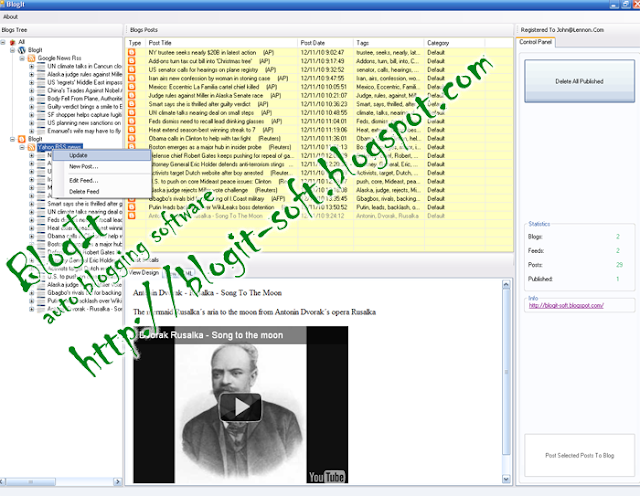
Generated by BlogIt

BlogIt - Auto Blogging Software for YOU!

BlogIt - autoblogging software for YOU

BlogIt - autoblogging software for YOU